
Your Home Has Physical Limits (and how incredibly practical that can be!)
/Over the past few weeks, I have been talking a lot about decision fatigue and there is a reason for that.
Many people assume getting organised is primarily a physical task. They believe the hard part is finding time to do it, buying the right storage products, or simply motivating themselves to start.
What often catches people off guard is how much decision-making is involved.
You open a drawer and suddenly you are making far more decisions than expected. Which container fits the leftovers? Where is the matching lid? Do you keep the spare drink bottle? What happens if you throw something away and need it later?
These may seem like small decisions in isolation. Repeated hundreds of times throughout a home, they become mentally exhausting.
What makes this harder is that people are often making these decisions without enough context. They are trying to decide how many containers to keep before stepping back and asking whether their kitchen is functioning the way they need it to. They question individual items without always looking at how the wider space is meant to work.
That lack of clarity can make very small decisions feel far bigger than they are.
This is often where people become stuck. They begin organising with good intentions, feel overwhelmed by the number of choices in front of them, and avoid making a decision altogether. Sometimes they close the drawer and walk away. Sometimes they buy more storage in the hope that the problem will disappear.
It rarely does.
One of the most common questions I hear is, “How many of these do I actually need?”
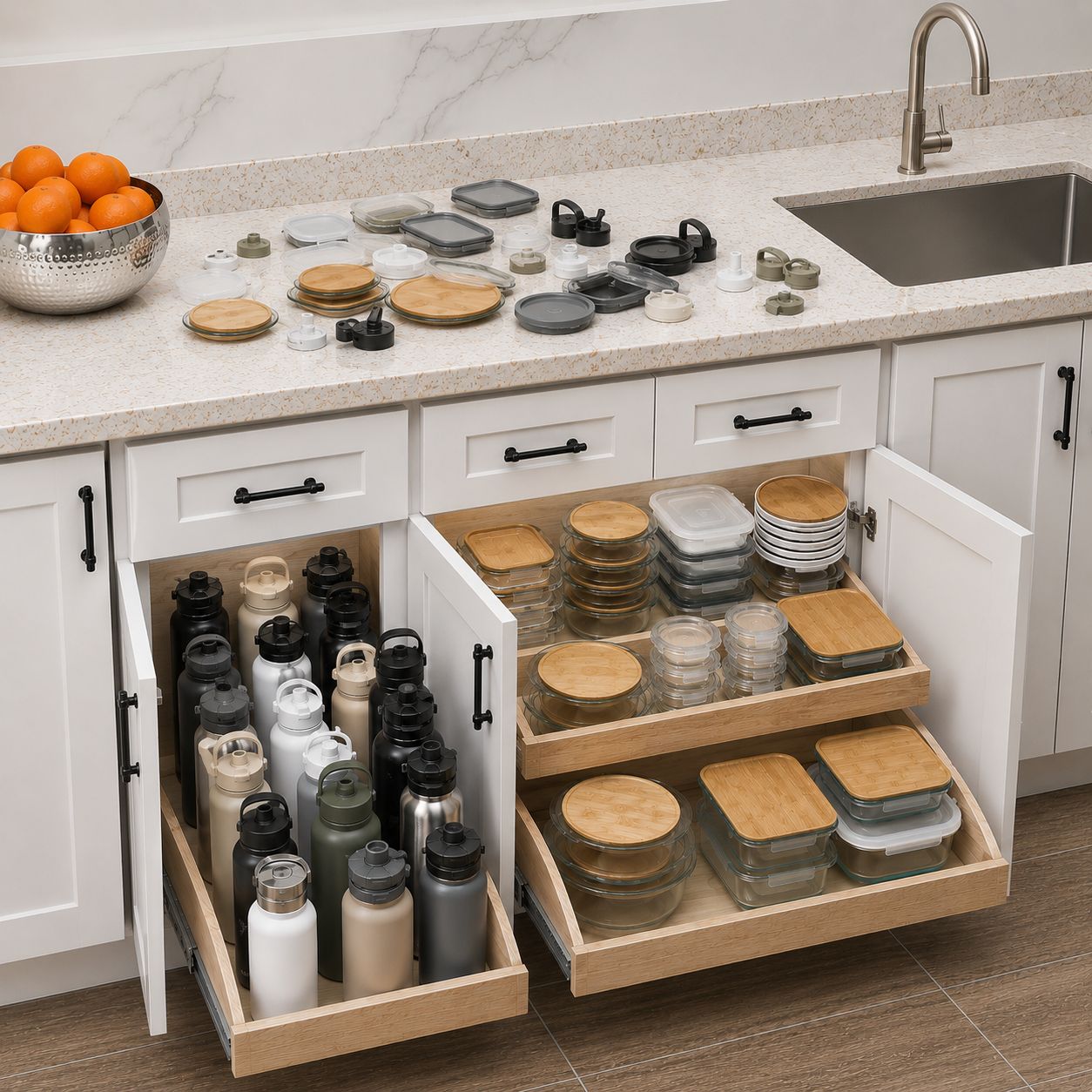
How many storage containers are enough?
How many towels should a family own?
How many coffee mugs are too many?
How many drink bottles does one household actually need?
There are certainly categories where excess becomes obvious quite quickly. Most households do not need dozens of drink bottles. Very few people need an overflowing drawer of food containers. An entire cupboard filled with reusable shopping bags is rarely practical.
The challenge is that people often stop thinking practically and start thinking emotionally.
They worry they may need the item later. They remember how much it cost. They feel guilty getting rid of something that was a gift. They keep duplicates for imagined scenarios that rarely happen. They hold onto items “just in case,” even when those items are making daily life harder.
If you are getting stuck, there is a far simpler way to decide.
Look at the physical space you have allocated to that category.
If your food containers live in one drawer, that drawer is your limit.
If your towels live on one shelf, that shelf is your limit.
If your drink bottles live in one cupboard, that cupboard is your limit.
Your home already has physical boundaries. Much of the stress begins when people try to push beyond them.
Drawers stop closing properly. Cupboards become frustrating to use. Items fall out when you open doors. Finding what you need becomes harder. Putting things away feels like a battle.
At that point, people often assume they need more storage. Quite often, they need fewer decisions.
A well-organised home has breathing room. It allows you to see what you own, access what you need, and put things away quickly without negotiating with your belongings every day.
This is not about owning the least. It is about owning what your home can comfortably support.
That is often when organisation starts to feel practical rather than emotional.